One Bean Wonder Guide to Single Origin Espresso

What Is Single Origin Espresso? (And Why Coffee Lovers Are Obsessed)

Single origin espresso is espresso made from coffee beans sourced from one specific farm, region, or country, rather than a blend of beans from multiple origins.
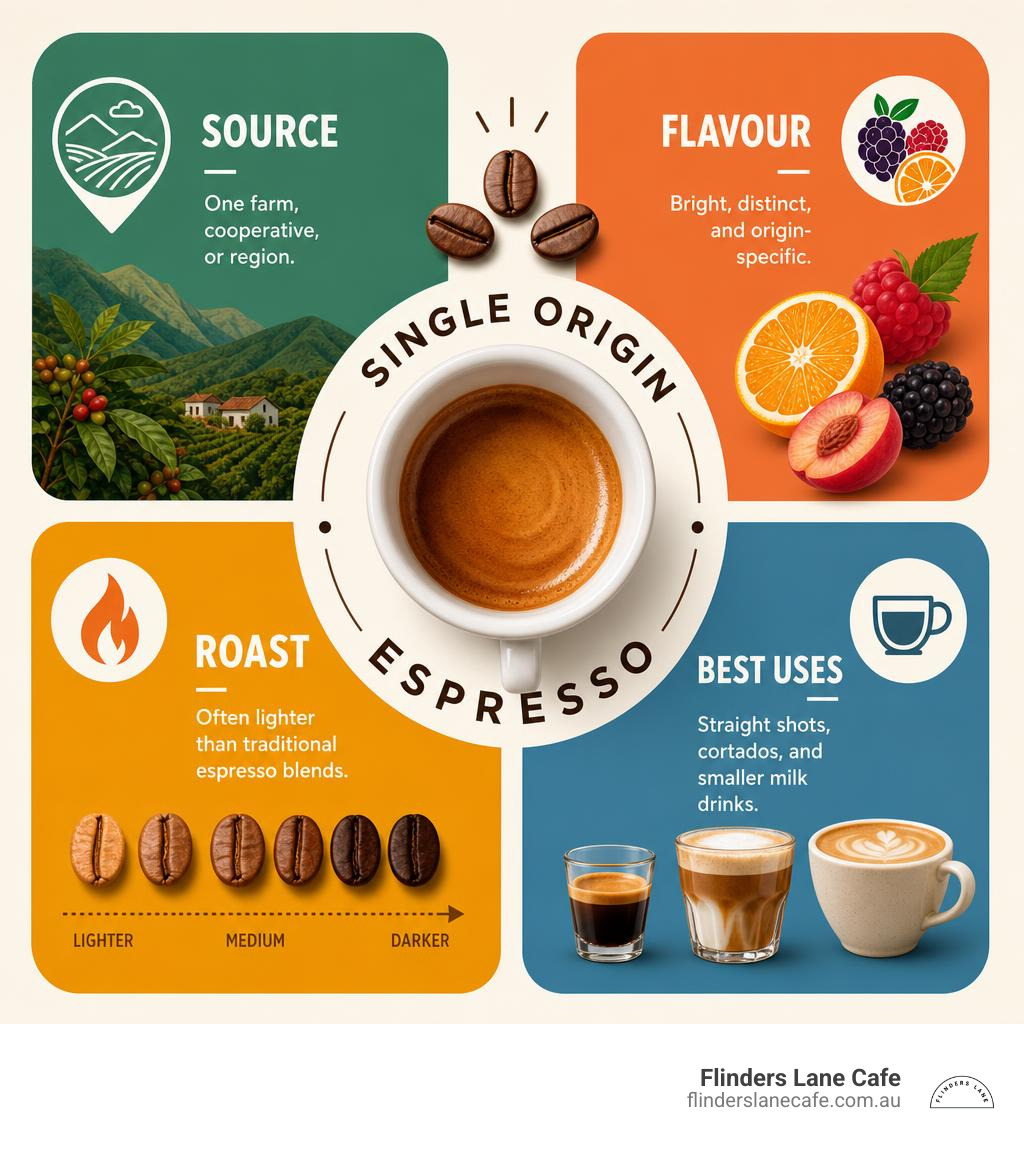
Here's a quick snapshot of what makes it unique:
- Source: One farm, cooperative, or defined region
- Flavour: Bright, distinct, and origin-specific (think berry, citrus, stone fruit)
- Roast: Often lighter than traditional espresso blends
- Best for: Straight shots, cortados, and smaller milk drinks
- Culture: A hallmark of third wave specialty coffee
Single origin espresso has become one of the most talked-about trends in specialty coffee. Espresso-based drink consumption in the United States has grown by 50% over the past eight years, and much of that growth has been driven by curious coffee drinkers who want to know exactly where their cup comes from.
Unlike traditional espresso blends, which combine beans from multiple origins to achieve a consistent, balanced flavour, single origin espresso puts one coffee front and centre. Every sip reflects the soil, altitude, climate, and processing method of a single source.
That can mean a wildly vibrant cup. Naturally processed Ethiopian beans, for example, have been known to deliver genuine blackberry and raspberry notes that stop first-time drinkers in their tracks. But it also means there's more variability, and brewing it well takes a little know-how.
That's exactly what this guide is here for.
I'm Janice Kutz, owner of Flinders Lane Cafe in Maroochydore, and with over 20 years in hospitality, I've developed a genuine appreciation for what a well-pulled single origin espresso can do. In this guide, I'll walk you through everything you need to brew one confidently at home.
What is Single Origin Espresso and How Does It Taste?
When you pull a shot of single origin espresso, you are tasting a specific place and time. Because the beans come from a single crop, the coffee is not designed to fit a pre-determined, year-round flavour profile. Instead, it highlights the unique characteristics of its terroir.
The flavour characteristics of single origin coffees are often highly pronounced. While a standard blend aims for a smooth, chocolatey, and nutty baseline, a single origin shot might burst with intense acidity, vibrant sweetness, and delicate fruit notes. You might taste the crisp acidity of green apple, the floral aroma of jasmine, or the deep sweetness of stone fruits like apricot and peach.
The roast profile plays a massive role in how these flavours translate to your cup. Many roasters prefer a lighter roast for single origins to preserve these delicate, origin-specific notes. However, because espresso extraction concentrates and amplifies every single flavour compound, a light roast can sometimes result in a shot that feels overly bright or sour if it is not extracted correctly.
Achieving the perfect balance of acidity, sweetness, and body is the ultimate goal when brewing these coffees. The body is often lighter and more tea-like than the heavy, syrupy mouthfeel of a dark-roasted blend, which makes the clarity of flavour shine even brighter.
Single Origin Espresso vs Espresso Blends
The debate between single origins and blends is one of the most enduring topics in modern coffee culture. Traditional Italian espresso is built around the blend. In Italy, many locals drink around 3 to 4 espresso shots a day, while heavier coffee-drinking regions may reach closer to 5 to 8. That makes balance, consistency, and a smooth, bitter-sweet profile especially important. Blends are designed for this consistency, combining different beans so that if one crop changes slightly, the overall flavour stays familiar.
Single origins, on the other hand, embrace the beauty of imbalance. They do not try to be everything to everyone. Instead, they highlight specific high notes and unique characteristics that might otherwise be lost in a blend.
| Feature | Single Origin Espresso | Espresso Blends |
|---|---|---|
| Bean Source | One specific farm, cooperative, or region | Multiple countries or regions combined |
| Flavour Profile | Vibrant, fruity, floral, and highly distinct | Balanced, chocolatey, nutty, and consistent |
| Roast Level | Typically light to medium | Medium to dark |
| Consistency | Seasonal, changes with every batch | Highly consistent year-round |
| Best Enjoyed As | Straight black shots or small milk drinks | Traditional milk coffees and lattes |
Understanding these differences is a great way to expand your coffee journey. If you want to dive deeper into how different coffee styles compare, check out our Types of Coffee Explained: The Ultimate Coffee Lover's Guide or learn about the Difference Between Coffee and Espresso Beans to see how roasting intentions shape your daily brew.
Best Coffee Origins and Processing Methods
Not all coffee beans are suited to be enjoyed as a single origin shot. Some origins and processing methods naturally lend themselves to the high-pressure environment of the espresso machine.
- Ethiopia: Often considered the birthplace of coffee, Ethiopian single origins are famous for their floral aromas and intense fruit flavours. Naturally processed Ethiopian coffees are particularly popular, offering striking notes of blackberry, blueberry, and orange blossom with a syrupy body.
- Colombia: Colombian coffees from regions like Huila are prized for their exceptional balance and high flavour clarity. Grown in volcanic soils at high altitudes, these beans often present a beautiful mix of dark chocolate, cherry, and crisp sugarcane sweetness.
- Costa Rica: Many Costa Rican farms utilise the honey processing method, where some of the sweet coffee cherry mucilage is left on the bean during drying. A yellow honey process, for example, balances body and sweetness beautifully, offering soft acidity and a clean finish.
- Kenya: Kenyan single origins are highly prized by espresso enthusiasts who enjoy intense, bright acidity. Grown at high altitudes, these coffees often showcase powerful blackcurrant and grapefruit notes, backed by a rich, brown sugar sweetness. When pulled as an espresso, a Kenyan single origin delivers an incredibly complex, juicy cup.
The processing method itself has a huge impact on your extraction. Washed coffees tend to have higher acidity and great flavour clarity, but they can be more challenging to dial in. Natural process coffees, where the fruit dries on the seed, bring more natural sugars, a heavier body, and a lower perceived acidity, making them slightly more forgiving when pulled as espresso.
For a complete breakdown of how these beans behave under pressure, read through our Espresso vs Espresso Coffee Guide.
The Third Wave Coffee Culture Shift
The rise of single origin espresso is deeply tied to the third wave coffee movement. This movement treats coffee as an artisanal product, similar to wine or craft beer, rather than a simple morning commodity.
At the heart of this shift is a focus on traceability, direct farmer partnerships, and sustainability. When you buy a single origin coffee, you often know the exact farm, the name of the producer, and the elevation where the coffee was grown. This transparency ensures that farmers are celebrated and fairly compensated for their incredible work.
This cultural shift has changed how we think about our daily cup. Instead of masking the coffee's natural flavours with heavy roasts, modern specialty roasters use lighter profiles to let the natural sugars and organic acids speak for themselves. This is a massive departure from traditional coffee culture, which prioritised a dark, smoky roast profile.
This shift also places a strong emphasis on education. Coffee lovers want to understand the variables that influence their cup. Learning about the varietals, such as Bourbon or Typica, and how they perform under pressure is all part of the modern specialty coffee experience.
To understand more about how these modern styles differ from traditional brewing methods, you can read our comparison on Espresso vs Coffee or explore the Most Popular Coffee Types driving the industry forward today.
Mastering the Brew: Your Step-by-Step Guide

Brewing a single origin coffee at home is a rewarding challenge. Because these coffees are often roasted lighter, they are less soluble than traditional dark-roasted blends. This means you need to adjust your extraction parameters to avoid a sour, under-extracted shot.
At Flinders Lane Cafe in Maroochydore, we believe that making great coffee should be an enjoyable, sustainable, and shared experience. Whether you are popping in to see us on the Sunshine Coast or brewing in your own kitchen, getting the parameters right is key to unlocking those beautiful flavours.
Here is what you will need to get started:
- Freshly roasted single origin coffee beans
- An espresso machine with manual control (if possible)
- A high-quality burr grinder
- Digital coffee scales with a timer
- A clean tamper
Before you start heating up your machine, take a look at our Flinders Lane Cafe Menu to get some inspiration for your morning ritual.
Dialling In Your Single Origin Espresso Shot
Because single origin beans can be stubborn to extract, we often recommend using a wider brew ratio than the classic 1:2 ratio used for blends. A 1:3 dose-to-yield ratio is an excellent starting point for lighter single origins. This extra water running through the coffee helps extract the deeper, sweeter compounds, balancing out the bright acidity.
Here is a step-by-step recipe to dial in your shot:
- Weigh your dose: Start with 20 grams of freshly ground coffee in your double basket.
- Distribute and tamp: Ensure your coffee bed is perfectly flat and even to prevent channelling.
- Set your water temperature: If your machine allows, aim for a slightly warmer temperature (around 93°C to 95°C) to help extract the less soluble light roast.
- Target your yield: Pull a total yield of 60 grams of liquid espresso.
- Time the extraction: Aim for a brew time of 24 to 28 seconds.
The Role of Pre-Infusion: If your espresso machine has a pre-infusion setting, we highly recommend using it for single origins. Pre-infusion gently wets the coffee puck at low pressure before the full 9 bars of pressure are applied. This helps saturate the coffee bed evenly, reducing the risk of channelling and ensuring a much more even extraction of those delicate, light-roast flavours.
If your shot runs too fast (under 24 seconds) and tastes sour or salty, your grind size is too coarse. Adjust your grinder finer. If the shot takes too long (over 30 seconds) and tastes bitter, dry, or ashy, your grind is too fine. Adjust it coarser.
For a deeper dive into the mechanics of extraction, check out our Beginners Guide to Brew Coffee vs Espresso and learn about managing your daily intake with The Espresso Caffeine Guide: What You Need to Know.
Milk-Based Drinks vs Straight Shots
One of the most common questions we get is whether single origin coffees work well in milk. The short answer is: yes, but it depends on the drink size.
A straight espresso shot or a short macchiato is the absolute best way to experience the pure, unmasked characteristics of a single origin. You get the full intensity of the fruit, floral, and acidic notes.
However, if you love a milk-based drink, single origins can still shine beautifully in smaller sizes like a flat white or a cortado. Naturally processed coffees with berry and chocolate notes can taste like a warm raspberry milkshake when paired with silky, textured milk.
When steaming milk for a single origin espresso, temperature control is critical. We recommend keeping your milk slightly cooler than usual, around 60°C to 65°C. Overheating the milk breaks down its natural sugars, which can create a heavy taste that overpowers the delicate floral and fruity notes of a light-roasted single origin. Keeping it sweet and velvety allows the coffee and milk to complement each other perfectly.
The trick is to avoid large, milk-heavy drinks like a giant mug latte, which can easily drown out the delicate flavours of a light-roasted single origin. For these larger drinks, a traditional blend is usually the better option.
To learn more about how milk alters the texture and strength of your coffee, explore our guide on Espresso Drinks Explained or read our detailed Explanation of Coffee Drinks.
Enjoying the Journey at Flinders Lane Cafe
At Flinders Lane Cafe, we love bringing people together over exceptional food and specialty coffee. Located in the heart of Maroochydore on the beautiful Sunshine Coast, our cafe is a warm, friendly space where you can relax, connect with friends, and enjoy a slow morning. We believe that every cup of coffee tells a story, and we are dedicated to sharing that story with our local community.
Whether you are stopping by for our signature Chilli Scramble (gfo), a classic Bacon Benny, or just want to chat about our latest single origin offerings, we would love to welcome you. We are also proud to be a dog-friendly cafe, so bring your four-legged friend along for a puppacino and some treats! Our outdoor seating area is the perfect spot to soak up the Sunshine Coast sunshine while enjoying a beautifully crafted brew.
Our kitchen focuses on simple, sustainable, and incredibly tasty breakfast and brunch options. From a quick B&E Roll on the run to a relaxed weekend avocado toast, we have got your mornings sorted.
Visit Us Today:
- Location: Unit 2/31 Flinders Ln, Maroochydore QLD 4558
- Opening Hours: Monday to Friday 6:30am to 1:00pm; Saturday and Sunday 7:00am - 1:00pm
Show our staff your 5-star review and receive a FREE small coffee on us! Drop by Flinders Lane Cafe in Maroochydore and treat yourself to your morning fix today!