A Comprehensive Guide to Cold Brew vs Iced Coffee Caffeine

Cold Brew vs Iced Coffee Caffeine: What's Actually the Difference?

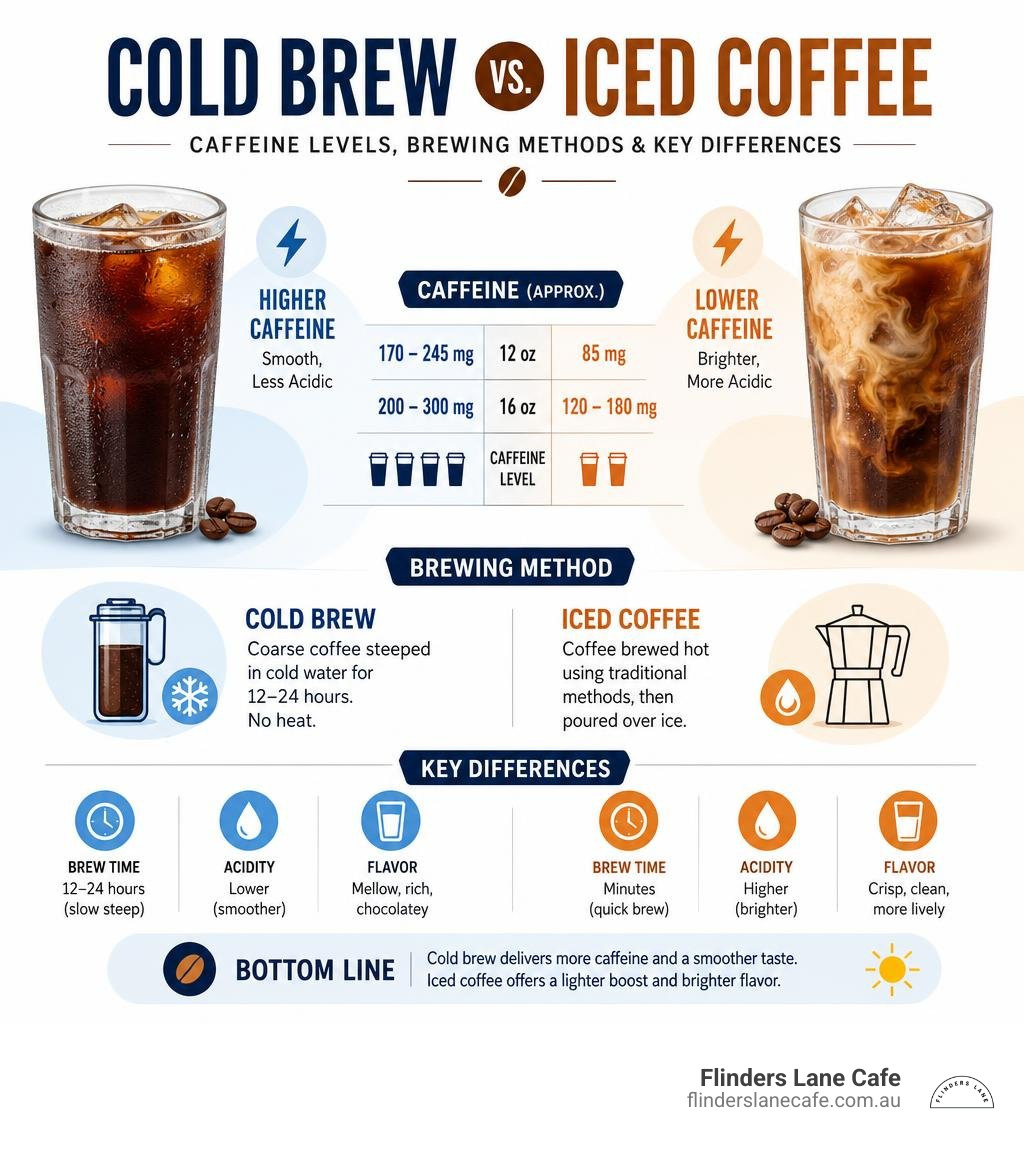
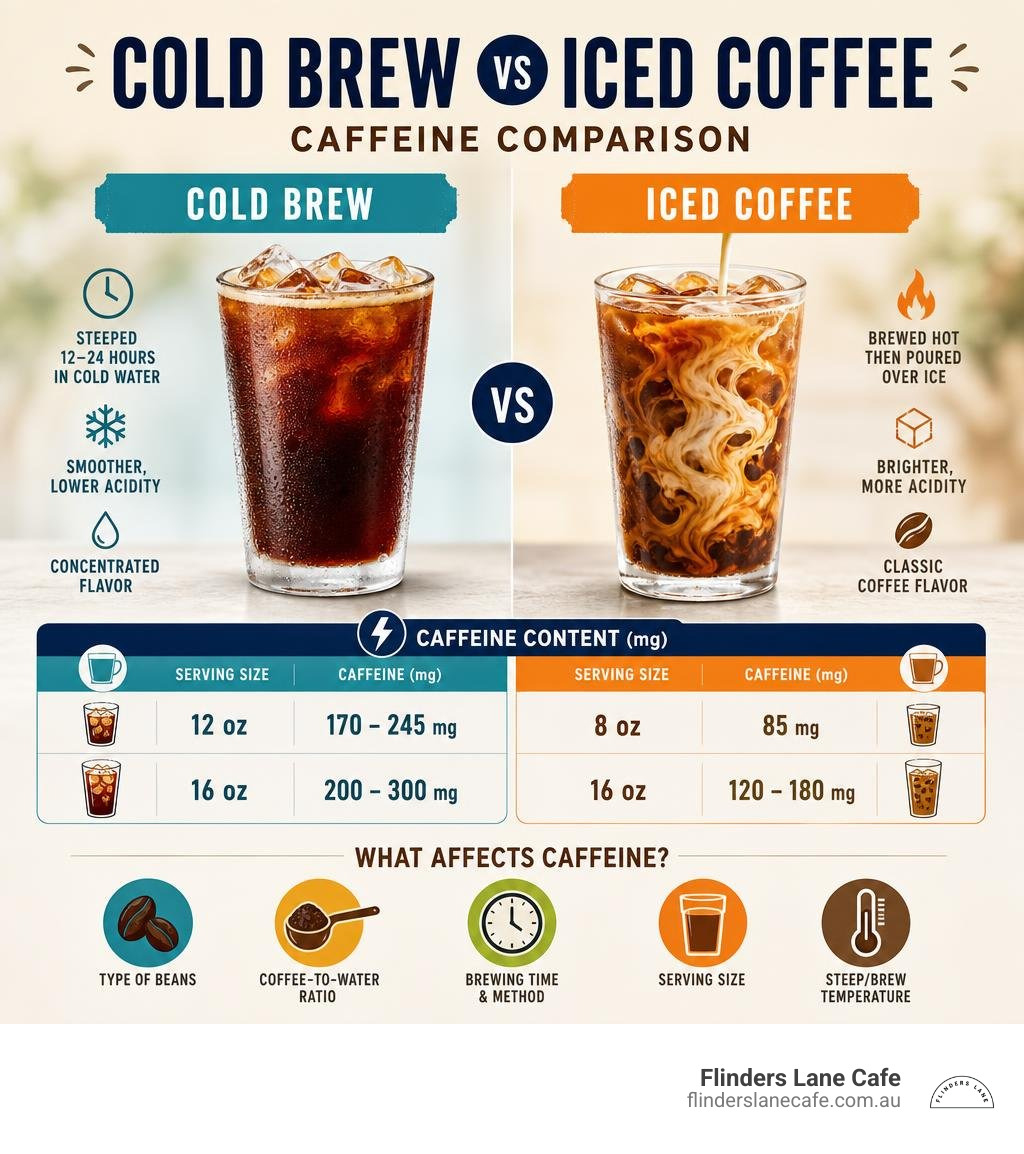
When it comes to cold brew vs iced coffee caffeine, the short answer is: cold brew almost always wins. Here's a quick breakdown before we dive deeper:
| Drink | Serving Size | Caffeine (approx.) |
|---|---|---|
| Cold brew | 12 oz | 170-245 mg |
| Cold brew | 16 oz | 200-300 mg |
| Iced coffee | 8 oz | 85 mg |
| Iced coffee | 16 oz | 120-180 mg |
So yes, cold brew is generally the stronger option. But the full story is a bit more nuanced than that.
These two drinks might look similar sitting side by side on a café counter, but they're made in completely different ways. And that difference in brewing method is exactly what drives the gap in caffeine content.
Cold brew is steeped in cold water for 12 to 24 hours without any heat. Iced coffee, on the other hand, is brewed hot and then poured over ice. Same beans, very different results.
The brewing method, the coffee-to-water ratio, the serving size, and even the type of beans all play a role in how much caffeine ends up in your cup. Understanding these factors helps you choose the right drink for the energy boost you're after.
I'm Janice Kutz, owner of Flinders Lane Cafe in Maroochydore, and with over 20 years in hospitality, I've watched the cold brew vs iced coffee caffeine debate play out at the counter more times than I can count. Let's break it all down so you can order (or brew) with confidence.
Cold brew vs iced coffee caffeine terms to know:
- Cold brew vs iced coffee
- Does cold brew taste different than iced coffee
- Is cold brew stronger than iced coffee
Cold Brew vs Iced Coffee Caffeine: Which Chilled Drink Packs the Strongest Punch?

When the warm Queensland sun starts beating down on Maroochydore, the demand for chilled caffeine skyrockets. If you are standing at our counter trying to decide between these two icy favourites, the caffeine punch is often the deciding factor.
Generally speaking, cold brew is considered the heavier hitter. A standard 12 oz serving of cold brew contains around 120 to 170 mg of caffeine. In comparison, a traditional iced coffee of the exact same size averages about 111 mg. If you scale that up to a larger 16 oz café cup, cold brew regularly delivers 200 to 300 mg of caffeine, while iced coffee sits comfortably in the 120 to 180 mg bracket.
This difference is not just a random fluke. It comes down to how the drinks are constructed and served. Because cold brew is incredibly smooth, it is easy to forget just how much energy it packs. It behaves like a stealthy energy boost, slipping down easily without the sharp, acidic bite that usually warns your palate of a high-caffeine beverage.
To help you visualise how these two popular options stack up against other common brews, here is a quick comparison table:
| Brew Type | Typical Serving Size | Average Caffeine Content |
|---|---|---|
| Single Espresso Shot | 1 oz (approx. 30 ml) | 63-75 mg |
| Double Espresso Shot | 2 oz (approx. 60 ml) | 126-150 mg |
| Hot Drip Coffee | 12 oz (approx. 355 ml) | 144 mg |
| Traditional Iced Coffee | 12 oz (approx. 355 ml) | 111 mg |
| Cold Brew (Diluted) | 12 oz (approx. 355 ml) | 170-245 mg |
| Cold Brew Concentrate (Undiluted) | 8 oz (approx. 240 ml) | 200-400 mg |
As you can see, cold brew consistently leads the pack when compared by typical serving sizes. Even if you are comparing a standard double-shot iced latte to a diluted cold brew, the prolonged steeping process of the cold brew almost always ensures a higher concentration of dissolved caffeine.
The Science Behind Cold Brew vs Iced Coffee Caffeine Extraction
To understand why the caffeine levels diverge so drastically, we have to look at the chemistry of extraction. Caffeine is highly soluble in water, but temperature acts as a major catalyst. Hot water extracts caffeine, oils, and acids from coffee grounds almost instantly. Cold water is much lazier, requiring a significantly longer time to pull those same solubles out of the beans.
To compensate for the lack of heat, cold brew relies on time and volume. We steep our coarse coffee grounds in cool, filtered water for anywhere from 12 to 24 hours. This extended immersion gives the water plenty of time to slowly saturate the grounds and pull out the caffeine.
Furthermore, cold brew uses a much higher coffee-to-water ratio during the brewing phase. A standard cold brew recipe often calls for a ratio of 1:5 or 1:8 (one part coffee to five or eight parts water). Traditional hot-brewed coffee, which is used to make iced coffee, generally uses a ratio closer to 1:16 or 1:17. Because you are using more than double the amount of dry coffee beans to create cold brew, the starting pool of caffeine is substantially larger.
Iced coffee, by contrast, is brewed hot and fast. It relies on the aggressive nature of hot water to extract caffeine in just a few minutes. While hot water is highly efficient at extracting caffeine, the quick brew time and lower volume of coffee grounds mean it simply cannot match the total caffeine yield of a long-steeped cold brew. This rapid extraction is why hot-brewed coffee has a sharper, more immediate bite, whereas the slow, patient extraction of cold brew results in a highly concentrated, incredibly smooth beverage that delivers a sustained release of energy.
Serving Sizes and Dilution: How They Affect Cold Brew vs Iced Coffee Caffeine
One of the biggest variables in the cold brew vs iced coffee caffeine comparison is how the final drink is assembled. When cold brew finishes its 24-hour steep, it is not ready to drink straight. What you have in the vessel is a highly concentrated, incredibly strong liquid.
If you were to drink eight ounces of pure cold brew concentrate, you would be consuming upwards of 400 mg of caffeine in one go. To make it palatable and safe, we dilute the concentrate. Typically, we use a 1:1 ratio, cutting the concentrate with filtered water, milk, or a dairy alternative.
This dilution step is where the final caffeine content can swing wildly. If a café dilutes their cold brew heavily, the caffeine content will drop closer to that of a standard iced coffee. If they prefer to serve it strong, you will get that signature high-octane kick. At Flinders Lane Cafe, we carefully balance this dilution process to ensure that every single cup of cold brew we serve maintains its signature rich body and optimal caffeine kick, without ever tasting watered down or overly intense.
Iced coffee faces a different dilution challenge. Because traditional iced coffee is brewed hot and then poured directly over ice, the melting ice immediately begins to water down the beverage. To prevent this from turning into a sad, watery cup, professional brewers will often brew the initial hot coffee at double strength. This ensures that as the ice melts, the drink dilutes down to a perfect, balanced strength rather than becoming tasteless.
How Bean Type, Roast, and Grind Size Impact Caffeine Levels
Beyond the brewing equipment and water temperature, the raw ingredients themselves dictate the limits of your caffeine intake. The journey starts with the species of coffee bean. The coffee world is dominated by two main varieties: Arabica and Robusta. Robusta beans naturally contain almost twice as much caffeine as Arabica beans. Most specialty cafés prefer Arabica for its sweet, complex flavour profiles, but if a blend contains Robusta, the caffeine content will naturally skyrocket.
Roast level also plays a surprising role in the equation. There is a common misconception that dark, oily roasts contain more caffeine because they taste stronger and more bitter. In reality, light roasts are denser and retain slightly more caffeine by volume. During the roasting process, beans lose water weight and expand. If you measure your coffee by the scoop (volume), light roast will deliver more caffeine because the beans are smaller and denser. If you measure by weight (grams), the difference is negligible, though light roasts still hold a slight edge in chemical retention.
Finally, we must consider the grind size. Cold brew requires a very coarse grind, resembling sea salt. This coarse texture is essential because the grounds sit in water for a day. If you used a fine espresso grind, the water would over-extract the bitter compounds, resulting in a muddy, unpleasant brew. Iced coffee is typically made with a medium grind, perfect for a quick hot extraction before it hits the ice. The larger surface area of the coarse cold brew grind requires that long steeping time to release its caffeine, whereas the medium grind of iced coffee releases its payload almost instantly.
Acidity, Taste, and Stomach Sensitivity

The chemical differences between these two brewing methods do not just affect your energy levels; they also completely transform the taste and how the drink behaves in your digestive system. This is a massive talking point for our local community here on the Sunshine Coast.
Because cold brew is made entirely without heat, it extracts up to 67% less acid than hot-brewed iced coffee. Hot water aggressively pulls out the bitter oils and biting acids from the coffee grounds. When these acids hit your stomach, they can trigger acid reflux, heartburn, or general digestive discomfort.
For many of our regulars who love a morning surf at Alexandra Headland or a walk through Buderim but suffer from sensitive stomachs, cold brew has been an absolute game-changer. It is naturally smooth, sweet, and carries deep, chocolatey undertones. Because it lacks that sharp, acidic bite, many people find they do not need to add any sugar or milk to enjoy it.
Iced coffee, on the other hand, retains that classic, bright, and lively acidity. If you love a coffee that has floral, citrusy notes and a clean, crisp finish, iced coffee is the way to go. It is a fantastic option if you want a lighter-bodied drink that pairs beautifully with milk or a splash of syrup. However, if you are sensitive to caffeine or prone to jitters, the rapid absorption of iced coffee's acidic profile might feel a bit more intense than the steady, gradual release of a smooth cold brew.
The Final Sip: Choosing Your Perfect Chilled Caffeine Kick
Whether you are looking for the smooth, high-energy kick of a cold brew or the bright, refreshing zip of a traditional iced coffee, both drinks have earned their rightful place on our summer menus. The choice ultimately comes down to your personal caffeine tolerance, your flavour preferences, and how your stomach handles acidity.
At Flinders Lane Cafe in Maroochydore, we believe that exciting things happen when people come together over great coffee and food. Our philosophy, guided by Janice Kutz, is all about keeping things sustainable, easy, and enjoyable for our local Sunshine Coast community. We love seeing friends, families, and even your four-legged mates drop by for a relaxed morning in the coastal breeze.
Next time you are in the area, why not pair your favourite chilled brew with one of our signature breakfast options? If you have opted for a bold, low-acid cold brew, it pairs beautifully with the rich, savoury layers of our classic Reuben Sando. If a bright, refreshing iced coffee is more your style, try pairing it with our famous Chilli Scramble or a classic Bacon Benny to kick-start your weekend. We also have amazing lunch options like our Veggie Sando, or simple classics like Avocado Toast and a Ham & Cheese Toastie. If you are bringing the kids or just fancy something fruity, we also whip up delicious Mango Smoothies (made with frozen mango, banana, honey, and milk) and Berry Smoothies (packed with frozen mixed berries, yoghurt, honey, and milk). These two signature smoothies are crafted to perfection, offering a refreshing, wholesome option alongside our seasonal specials.
We are incredibly proud to be a dog-friendly space, so bring your pup along for a cheeky puppacino and some treats while you sit back and soak in the local atmosphere. Our welcoming outdoor seating area is the perfect spot to unwind, catch up with friends, and enjoy the beautiful coastal weather.
We are located at Unit 2/31 Flinders Lane, Maroochydore 4558. We are open Monday to Friday from 6:00am to 1:30pm, and Saturday to Sunday from 7:00am to 1:00pm.
Ready to find your perfect icy match? Drop by Flinders Lane Cafe in Maroochydore and treat yourself to your morning fix today! If you love what we do, show our friendly staff your 5-star review on your next visit and receive a FREE small coffee on us!